
Methyl methacrylate adhesives, also known as MMAs or acrylic adhesives, are two-part reactive acrylic adhesives. By themselves, methyl methacrylates cure to a hard, brittle film. Therefore, most MMAs are formulated with modifiers that improve flexibility and act as strengthening agents. These modifiers greatly improve the MMA’s overall tensile strength, as well as its resistance to peeling and impact damage.
Methyl methacrylate adhesives cure differently than other two-part adhesives. This means that they are less sensitive to mixing ratios. The ratio for mixing can vary from 100:3 to 1:1, allowing the user to adjust how fast or slow the MMA cures. Increasing the curing temperature can also speed up cure time, but the final strength will suffer significantly if the product is cured too quickly.
Most two-part adhesives require the resin and hardener to be mixed before the mixed solution is applied to the area to be bonded. This is where MMAs stand out from the crowd. When using MMAs, the resin can be applied to one surface and the hardener to the other. Bringing the two surfaces together will initiate the curing process. This unique feature can greatly reduce waste while saving you time.

These adhesives are used in numerous industries, but they are becoming increasingly common in wearable and handheld devices. These tiny electronics – including smartwatches, Bluetooth earpieces, etc. – simply cannot be manufactured using traditional welding or riveting techniques. The companies that make these products use MMAs because they create strong bonds without adding extra weight or bulk to the device.

WHAT ARE MMAS AND HOW DO THEY WORK?
Compared to other products, like cyanoacrylate adhesives, epoxies, and polyurethanes, MMAs are relatively new. They consist of an adhesive resin component that is made of methacrylate monomers and amines mixed with additional toughening agents and rubbers. The other component is a peroxide-based activator paste. When the two components are mixed, the amines react with the peroxides to release reactive free radicals. These free radicals then interact with a double bond found in the methacrylate monomers, resulting in a rapid, exothermic polymerization reaction and the curing of the adhesive.

Unlike other structural adhesives, MMAs work well when bonding dissimilar materials, such as flexible plastic and rigid metal. They combine exceptional flexibility with high strength to form bonds that are extremely durable yet flexible enough to work well for dissimilar surfaces. The fast exothermic reaction means that the time between curing and fixture is very short, making these adhesives ideal for fast-paced environments.
ADVANTAGES OF MMAs
MMAs offer distinct advantages, especially when it comes to the integrity of the materials bonded. While riveting or welding can result in stress points that lead to cracks in the structure, a thin layer of MMA distributes the load more evenly. This eliminates weak spots and their potential failures. Compared to welding and riveting, using a structural adhesive also looks nicer and improves the aesthetics of the finished product.

Because they are less sensitive to variations in mixing ratios than other two-component adhesives, users can adjust the cure profile of MMAs to suit their needs. This means that the adhesive can be formulated to have a slower reaction rate after mixing to allow for a longer work life. It can also be formulated to cure faster to speed up the assembly process when needed. This level of flexibility is not possible with many other types of structural adhesive, so this is a huge benefit.
Bonds created using MMAs have excellent temperature tolerances and remain flexible at low temperatures. MMAs have excellent resistance to environmental factors and solvents, as well as a high resistance to fatigue. MMAs have high tensile strength, good impact resistance, excellent peel strength, and minimal bond shrinkage.
When using them, there is no need to use a primer. MMA adhesives cure at room temperature and are extremely easy to apply. Compared to urethanes, they have a higher bond strength and offer better resistance to impact and fatigue.
MMA Adhesives to Try
MMA adhesive glues are widespread on the market, and because they can be easily modified, manufacturers like Henkel, Infinity Bond, and 3M offer numerous MMAs designed for different needs.
With so many methyl methacrylate adhesives available, it can be hard to know what to choose. To help, we are highlighting some of our favorite MMA adhesives that you can try for your application.
Infinity Bond MMA 300
Infinity Bond MMA 300 is a high-performance methyl methacrylate structural adhesive with a 1:1 mix ratio. It bonds strongly to a wide range of materials, including metals, fiberglass, and many plastics. The MMA glue has a working time of about 5 to 8 minutes and a fixture time of around 10 to 12 minutes. The product also boasts high resistance to chemicals, extreme temperatures, weather, and shock. Altogether, this product is a great option for several general-purpose applications.
Infinity Bond MMA 310
Infinity Bond MMA 310 is a two-part MMA adhesive with a medium set time and a fixture time of about 20 to 25 minutes. It bonds well to aluminum, steel, composites, and most plastics with minimal surface preparation and provides great resistance to thermal cycling. The MMA adhesive is best suited for bonding small assemblies when high movement is not required.
Infinity Bond MMA 420
From product assembly to manufacturing, the Infinity Bond MMA 420 is a versatile MMA adhesive with a fast set time of about five minutes. Its toughened formula and higher flexibility add to its impact and vibration resistance. Compared to other MMAs, it is especially fit for large bonding applications in the transportation industry.
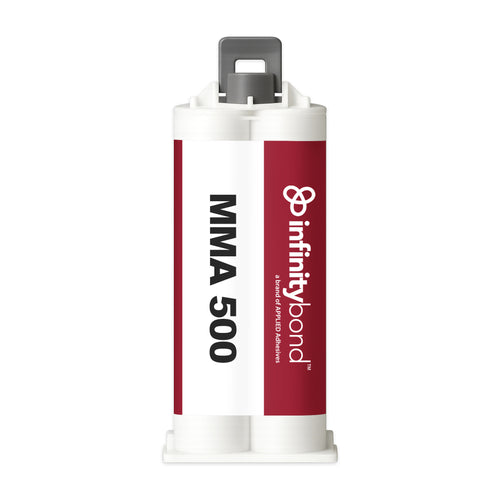
Infinity Bond MMA 500
The Infinity Bond MMA 500 is specially formulated to bond difficult materials without extensive surface preparation. While many other adhesives would fail, the unique chemistry of the MMA 500 is able to achieve strong adhesion to low-energy plastics like PE and PP. The adhesive also has properties like a high level of chemical resistance, weather resistance, and impact resistance. Consequently, it is a top option for demanding applications that require reliable bonding to difficult substrates.
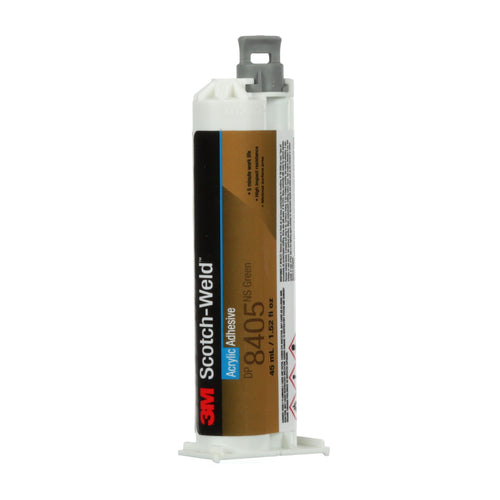
3M DP8705NS
The 3M DP8705NS is a two-part, low-odor adhesive with a 10:1 mix ratio and can achieve 200% elongation. The NS stands for non-sag, so it resists slumping and is a good fit for vertical applications. The adhesive is also resistant to temperatures as low as -40°F (-40°C) for great performance in cold weather applications. Spacer beads allow for precise bond line thickness.
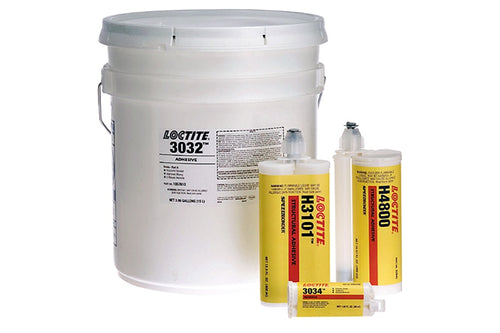
Loctite H3000
Loctite H3000 is a high-strength structural adhesive that can be used to bond a wide variety of substrates. It is a general-purpose product with a low viscosity and a medium fixture time. It has a work life time of 5 minutes and a shear strength of 4150 psi when bonding steel.

Loctite H8110
Loctite H8110 Speedbonder is a two-part MMA system that works especially well to glue aluminum. It is the fast fixture version of another Loctite product – Loctite H8000. It contains glass spacer beads to prevent users from over-clamping assemblies and fixtures in 5 to 10 minutes on steel. It has a full cure time of 24 hours and once fully cured has a shear strength of 1500 psi on steel.

Find the Right MMA
When you need to bond dissimilar materials and welding or mechanical fasteners are not good options, a methyl methacrylate adhesive may be your best bet. These products come in a wide variety of formulations to meet a broad range of needs, and they work exceptionally well for bonding dissimilar surfaces.
If you need help determining which MMA adhesive glue to use for your application, you can speak with one of our experts. They can recommend products that would be the best fit.